Category art

Toshio Matsumoto: Funeral Parade of Roses (1969)
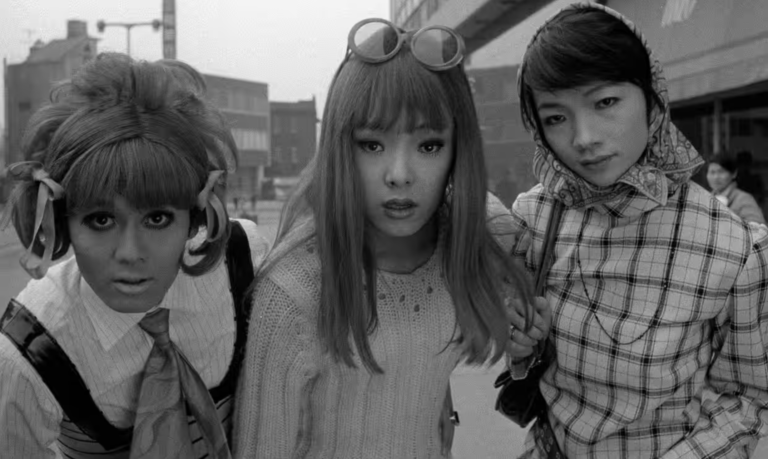
Director Toshio Matsumoto’s shattering, kaleidoscopic masterpiece is one of the most subversive and intoxicating films of the late 1960s: a headlong dive into a dazzling, unseen Tokyo night-world of drag queen bars and fabulous divas, fueled by booze, drugs, fuzz guitars, performance art and black mascara. An unknown club dancer at the time, transgender actor Peter (from Kurosawa’s Ran) gives an astonishing Edie Sedgwick/Warhol superstar-like performance as hot young thing Eddie, hostess at Bar Genet — where she’s ignited a violent love-triangle with reigning drag queen Leda (Osamu Ogasawara) for the attentions of club owner Gonda (played by Kurosawa regular Yoshio Tsuchiya, from Seven Samuri and Yojimbo).
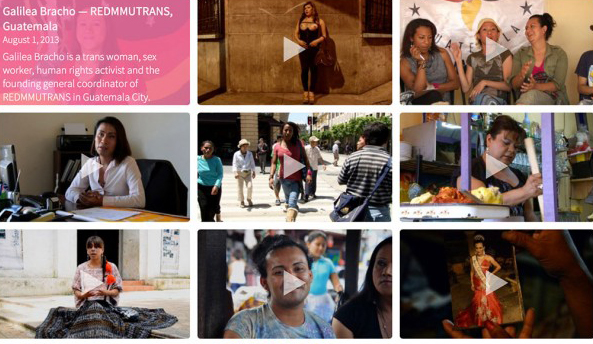
Carlos Motta: Gender Talents (2013)

GENDER TALENTS is a web-based project by artist Carlos Motta that engages movements and discourses for gender self-determination within trans and intersex communities internationally. It features an online archive of video portraits of trans and intersex activists who thoughtfully perform gender as a personal, social, and political opportunity rather than as a social condemnation. Based on in-depth interviews conducted in Colombia, Guatemala, India and the United States the portraits expose the ways that activists challenge the bio-cultural “foundations” of society and question gender norms from the perspective of sexuality, class, race, ethnicity, and disability.

Black_Women*_Space: The Black Her*Stories Project (2015)

Screenings, film discussions, workshop organized by Black_Women*_Space
Wienwoche, 2015

The Black Her*Stories Project presents the first queer Black feminist film festival in Vienna. The selected films depict stories by and about Black LGBTIQ people (Lesbian, Gay, Bisexual, Transgender, Intersex, Queer), bringing them to the cinema screen and thus creating decolonial and feminist resistance.

The Black Her*Stories Project utilises the medium of film to highlight and pass on queer Black feminist stories. For three nights the cinema Top Kino stands in the light of Black revolutionary resistance. From feature films to documentaries and experimental movie formats, what connects these powerful, artistic and humoristic narratives is their political relevance. Not only do queer Black feminist positions claim space, but social struggles and movements are made visible.

Isaac Julien: The Attendant (1993)

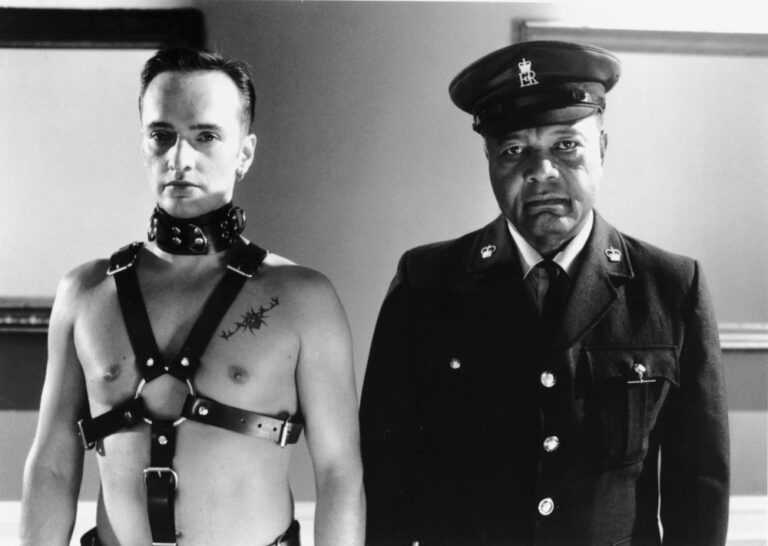
The plot revolves around sexual fantasies aroused in a middle-aged black male museum guard — or attendant — by a young white male visitor. Much of the action takes place after closing time. As the guard paces the galleries, a huge 19th-century painting titled “Slaves on the West Coast of Africa”, by the French artist François-Auguste Biard, comes to life, its melodramatic scene of a white master bending over a dying black slave transformed into an up-to-date, leather clad sadomasochistic grouping.

TROPICAL VIDEO ACTIVISM. Transformative Illegalities & Post-Porning Genders

Curated by Fernanda Nogueira

March 7, 2015, 4-9pm, VBKÖ, Vienna

This screening program stems from the urgencies of a collective body, a body formed by fragments, a mutant, which resists any classification, provocative, unsatisfied, which creates new ways of living by acting in the territory of transgression. Tropical Video Activism presents video productions – either registers of actions or more experimental poetics – as signs to make visible, read and spread social transformations, which are in furious excitement in the public sphere in many Southern geographies.

These processes are not happening just in a single territory. We can map the social effervescence, the networks arising and intensifying the emergence and encounter of new transborder communities capable of sharing activist tools and circulating critical information which in the past could only be found in independent, underground and thought marginal networks. Facing the urgency of action and its various potentialities in these different territories, the modern categories such as “originality” or “authenticity” are turned obsolete. In contrast, a broader notion of “network” is strengthen daily in the configuration of a collective battlefield […]

Shu Lea Cheang: FLUIDØ (2017)

Following the acclaimed cyberpunk movie I.K.U., which premiered at the 2000 Sundance Film Festival and screened worldwide, Shu Lea Cheang is set to direct FLUIDØ in 2015 with Jürgen Brüning Filmproduktion and Berlin-based crew and cast members.

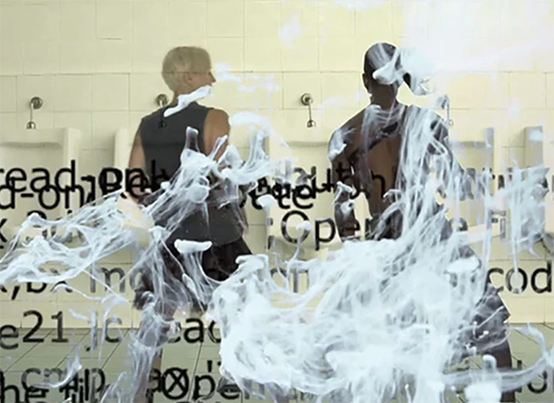
Set in the post-AIDS future of 2060, where the Government is the first to declare the era AIDS FREE, mutated AIDS viruses give birth to ZERO GEN - humans that have genetically evolved in a very unique way. These gender fluid ZERO GENs are the bio-drug carriers whose white fluid is the hypernarcotic for the 21st century, taking over the markets of the 20th century white powder high. The ejaculate of these beings is intoxicating and the new form of sexual commodity in the future. The new drug, code named DELTA, diffuses through skin contact and creates an addictive high.

Giuseppe Campuzano: Museo Travesti de Perú (2009-2013)

El Museo Travesti de Perú nace de la necesidad de una historia propia —una historia del Perú inédita—, ensayando una arqueología de los maquillajes y una filosofía de los cuerpos, para proponer una elaboración de metáforas más productiva que cualquier catalogación excluyente. Lo travesti se plantea entonces como subversión de la condición espuria que tanto el museo tradicional, como los presupuestos sociales, le endilgan. Al respecto, contextos históricos tan diferentes como el Perú prehispánico y el marco propuesto por Magnus Hirschfeld durante la República de Weimar, admiten todo un rango de posibilidades entre los extremos de lo masculino y lo femenino.

Jai Arun Ravine: Tom/Trans/Thai (2013)

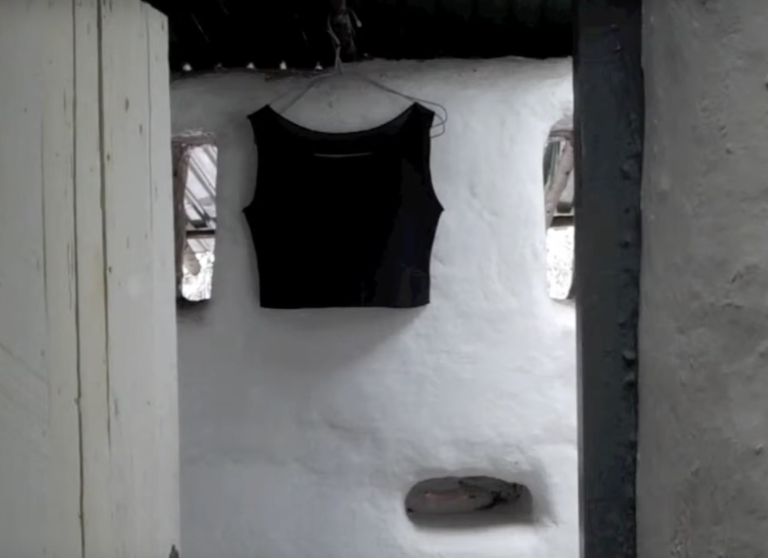
Tom / Trans / Thai is a short experimental film that approaches the silence around female-to-male (FTM) transgender identity in the Thai context by addressing tom and trans-masculine identities in Thai and Thai American communities and the transnational relationships between gender and language.

Interviews conducted with Thai and Thai American toms and trans-masculine people are channeled through the moving body in an effort to locate ourselves in the Thai landscape and create a new language for our kind of being.