Category art

Alianzas tullido transfeministas a traves de la sexualidad y la postpornografía
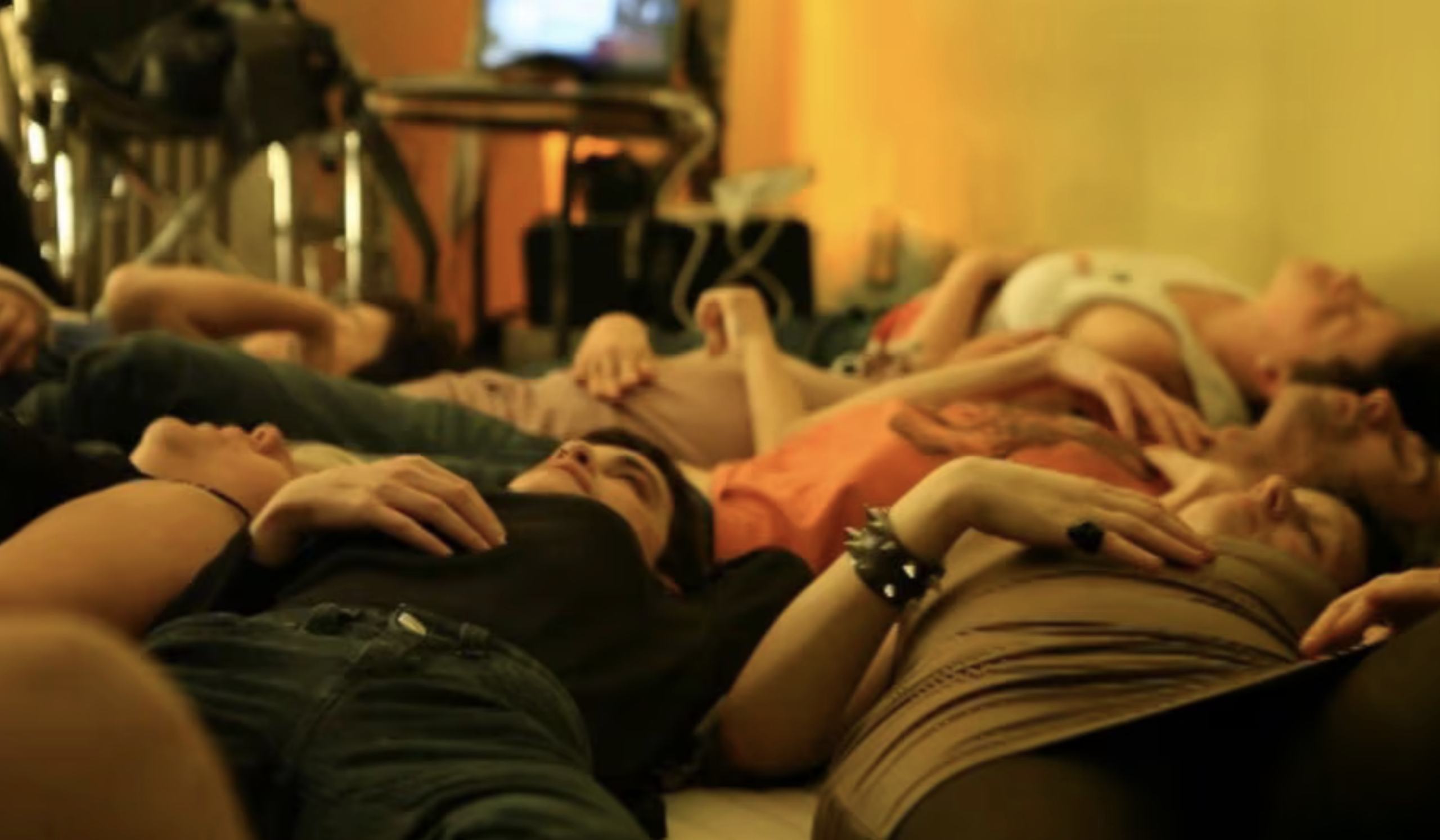
Presentación y proyección de vídeo a cargo de Pornortopedia y postporno tullido Nexos. Con la participación de Post-Op, Lucrecia Masson y Patricia Carmona.

La idea es contribuir al imaginario pornografico con la visibilización de cuerpos que se salen de los parámetros de normalidad corporal (tullidos, marimachos, trans, gordxs…) y mostrar como deseables las prácticas a las que estas corporalidades invitan.

“No es lo que el postporno puede hacer por la personas con diversidad funcional, sino precisamente estos cuerpos que se mueven y sienten de una manera no mayoritaria lo que pueden hacer por la sexualidad colectiva, ampliando prácticas e imáginarios.”

Pêdra Costa: de_colon_isation (2017->)

de_colon_isation is a live performance series to create a space of intimacy and political claim through the body, live images by a dildo camera and “The Southern Butthole Manifesto”. It uses post-porn as a strategy of pleasure, aesthetics and politics.…

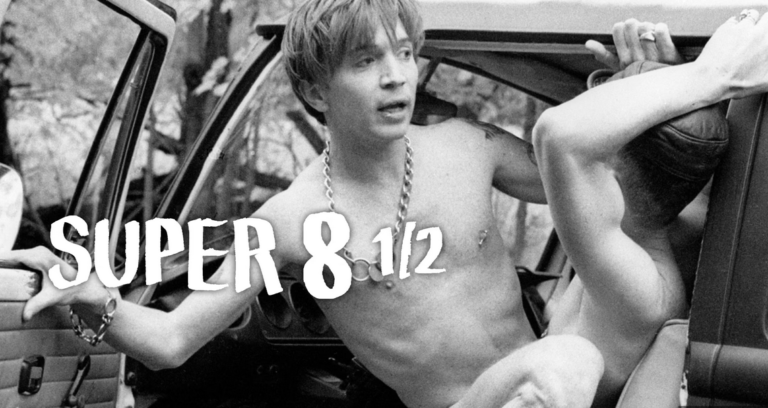
Bruce LaBruce: Super 8 1/2 (1993)

LaBruce stars in this vaguely autobiographical look at a triple-X star-director caught in the downward spiral of his career. Remarks Googie, the art-house auteur who's either exploiting LaBruce or launching his comeback, "He was actually attempting to break down the whole subject-camera relationship... It was as if he was an existentialist trapped in a porno star's body." Well, almost.

Marina Gržinić/Aina Šmid: The Threat of the Future (1983)

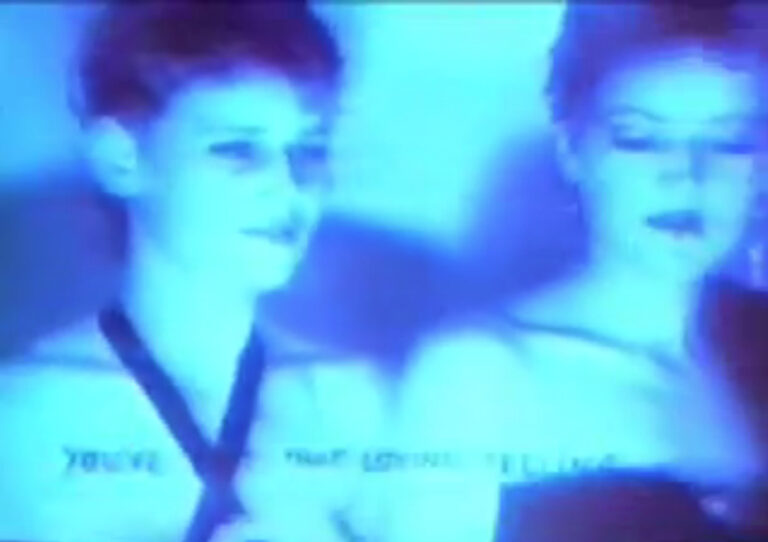
With the song by Yello “Pin ball cha cha” and the singer that invites us to watch by singing “Come, come closer to me, I tell you man you will see…” we enter in the dance performed by Marina Grzinic. The public is in relation to the dance as in a peep show, implying a pornographic camera eye but as well a certain cannibalisation/pornographic perpetuation of our lives by the law and mass media that from 1980s will transform the paradigm of society and discipline into society and control. Therefore we have a duplication of roles, Marina Grzinic and Aina Smid in front of the camera as in some kind of cinema verite (talking about their sexual lives and lesbian attitudes) and Grzinic/ Smid on the TV behind them as a night show.

Marissa Lôbo: Fuck you queer white supremacy celebration! (2012)

The video performance developed and performed by Marissa Lôbo in collaboration with Nataša Mackuljak, Alessandra do Santos Silva, Xhejlane Rexhepi and  Noemi Auer is an intervention on  Colonial desire and otherness, sexuality, racialized bodies, contra esthetic,  migrant-precarious bodies,  sex work, society double moral,…

Katia Sepulveda: Pascha Revolution (2011)

Performance on February 14th 2011, Cologne, Germany, 12:30 p.m. “Anticapitalism of love” with Amy Rush. Sepulveda and Rush are having sex at the main entrance of Pascha”, the biggest brothel in Cologne, intervening the „power architecture“, and the hyper-heteronormativity they…

Stephanie Wynne/Ta’Shia Asanti: Rashida X (1997)

The fictional character Rashida X, a black revolutionary activist lesbian chronicles the events leading to her imprisonment. Ta’Shia Asanti is a writer, poet, journalist, TV producer and filmmaker. She is recipient of the Audre Lorde Black Quill Award for Creating…

Shu Lea Cheang: I.K.U. (2000)

Shu Lea Cheang is best known for her 2000 cult smash I.K.U. in which sensual cyborgs fuck for information and pleasure. The film, heavily influenced by Blade Runner, is perhaps the first cyperpunk movie to radically explore the possibilities of cybernetic sexualities. The pioneer in the field of media art embraced internet and hacking culture early on, recognizing both its capacity to enslave as well as liberate, mixing that with queer and sexually explicit imagery bringing something new to the cultural landscape. Cheang describes herself as both a “cyberhomesteader” and a “high-tech aborigine” hinting at meta-levels of not only her own life, but the worlds of her films.

Sanja Iveković: Triangle (1979)

Sanja Iveković’s Triangle is an 18-minute performance that took place on 10 May 1979: while Yugoslavian president Josip Broz Tito’s motorcade passes by below, the artist is sitting on her balcony, reading a book, sipping whiskey and making ‘gestures’ as if performing masturbation, until a security official arrives and asks her to leave. Exhibited as four black-and-white photographs and a short descriptive text, Triangle is one of the most resonant and defiant works of performance made in the 1970s.