Dagmar Schultz: Audre Lorde – The Berlin Years 1984 to 1992 (2012)

2012 marks the 20th anniversary of Audre Lorde’s passing, the acclaimed Black feminist lesbian poet and activist. Throughout the 70s and 80s, Lorde’s incisive writings and speeches defined and inspired the women of color, feminist and LGBT social justice movements…

Zanele Muholi: Difficult Love (2010)

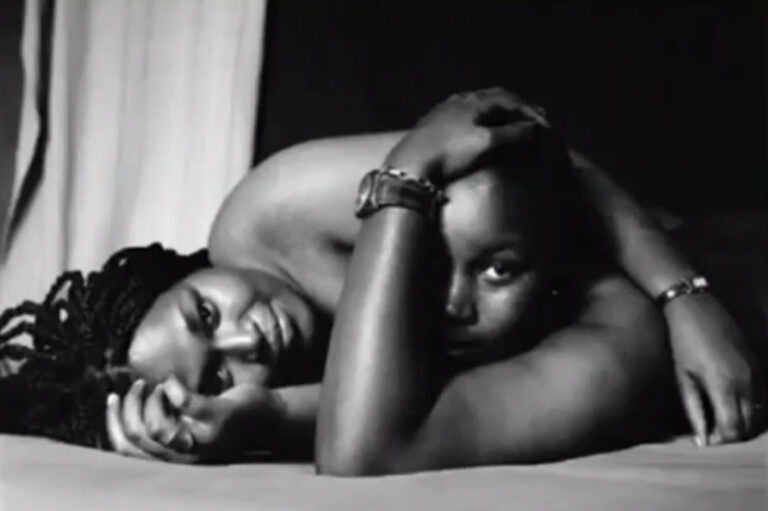
A highly personal take on the challenges facing Black lesbians in South Africa today emerges through the life, work, friends and associates of 'visual activist' and internationally celebrated photographer, Zanele Muholi.

Adele Tulli:365 without 377 (2011)

Imposed under the British colonial rule in 1860, Section 377 of the Indian Penal Code criminalized any sexual acts between consenting adults of the same sex, stigmatizing them as “against the order of nature”. On 2nd July 2009 the…

Stephanie Wynne/Ta’Shia Asanti: Rashida X (1997)

The fictional character Rashida X, a black revolutionary activist lesbian chronicles the events leading to her imprisonment. Ta’Shia Asanti is a writer, poet, journalist, TV producer and filmmaker. She is recipient of the Audre Lorde Black Quill Award for Creating…

Shu Lea Cheang: I.K.U. (2000)

Shu Lea Cheang is best known for her 2000 cult smash I.K.U. in which sensual cyborgs fuck for information and pleasure. The film, heavily influenced by Blade Runner, is perhaps the first cyperpunk movie to radically explore the possibilities of cybernetic sexualities. The pioneer in the field of media art embraced internet and hacking culture early on, recognizing both its capacity to enslave as well as liberate, mixing that with queer and sexually explicit imagery bringing something new to the cultural landscape. Cheang describes herself as both a “cyberhomesteader” and a “high-tech aborigine” hinting at meta-levels of not only her own life, but the worlds of her films.

Dušan Makavejev: W.R.:Mysteries of Organism (1971)

W.R.: Mysteries of the Organism is a 1971 film by Dušan Makavejev that explores the relationship between communist politics and sexuality, as well as exploring the life and work of Wilhelm Reich. The film intercuts documentary footage with, predominantly, a narrative about Milena, a Yugoslav woman who seduces a Soviet ice skater. Despite different settings, characters and time periods, the different elements produce a single story of human sexuality and revolution through a montage effect.

Sanja Iveković: Triangle (1979)

Sanja Iveković’s Triangle is an 18-minute performance that took place on 10 May 1979: while Yugoslavian president Josip Broz Tito’s motorcade passes by below, the artist is sitting on her balcony, reading a book, sipping whiskey and making ‘gestures’ as if performing masturbation, until a security official arrives and asks her to leave. Exhibited as four black-and-white photographs and a short descriptive text, Triangle is one of the most resonant and defiant works of performance made in the 1970s.

Lizzie Borden: Born in Flames (1983)

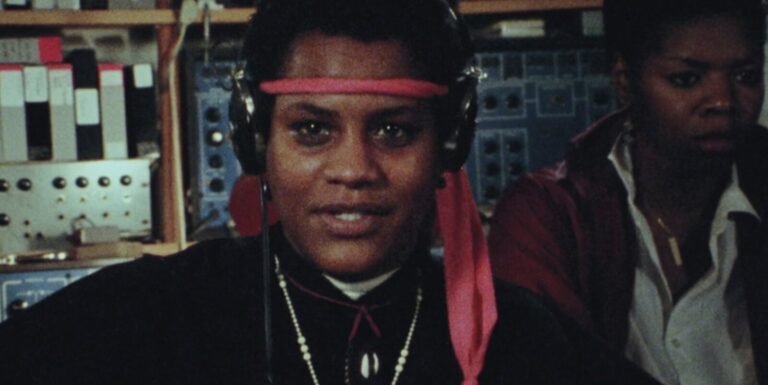
Born in Flames is a 1983 documentary-style feminist science fiction film by Lizzie Borden that explores racism, classism, sexism and heterosexism in an alternative United States Socialist Democracy.